

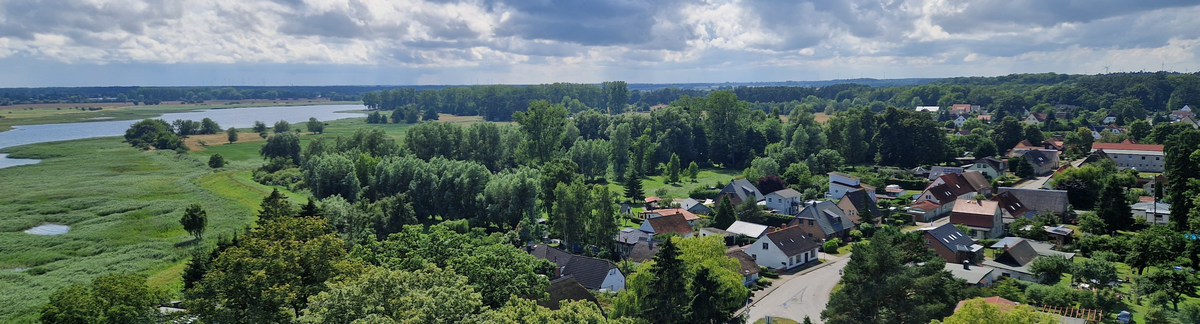
AdaptInfra starts from the hypothesis that the adaptation of infrastructures to changing social conditions is a necessary prerequisite for securing the access to public services in rural and peripheral areas. Infrastructures are understood as socio-technical systems consisting of material, institutional, and actor dimensions.
Aim of the project:
Mit Blick auf die Besonderheiten ländlich-peripherer Räume setzt AdaptInfra sich folgende Ziele:
describe and explain adaptation processes in infrastructure systems
evaluate the adaptability of different infrastructures
identify generalizable principles for the design of adaptive infrastructures
The conceptual framework is based on a socio-technical understanding of infrastructures and a system dynamics perspective on their adaptation. The project focuses on the specific challenges faced by the development and design of infrastructure in rural and peripheral areas. The focus is on infrastructures of public services, which are intended to ensure the constitutionally fixed appropriate participation of all individuals in social life, in the sense of establishing equal living conditions throughout Germany (cf. Article 72, Paragraph 2 of the German Constitution). The infrastructures that create prerequisites and provide the inputs for public services are as numerous as the goods and services required to fulfil basic human needs. In order to arrive at generalizable conclusions despite this diversity of infrastructures, AdaptInfra is investigating adaptation processes of various key public services infrastructures in seven subprojects based on an innovative and coherent collaborative concept. A synthesis project and the investigation of cross-cutting aspects provide a comprehensive perspective.
As a regional example, case studies in the reference region of Western Pomerania are compared with selected areas in Germany and the Baltic Sea region. The collaboration within AdaptInfra is based on disciplinary expertise in individual infrastructure systems, combined with extensive experience in interdisciplinary collaboration, and embedded in a supportive, environment at Greifswald University. AdaptInfra creates excellent conditions for 10 doctoral students to conduct groundbreaking interdisciplinary research on a socially relevant topic.
Subprojects and researchers
SP 1 Archetypes of infrastructure adaptation in rural-peripheral regions
Modeling and synthesis of complex dynamic socio-technical systems
Responsible Person
Prof. Dr. Volker Beckmann - Landscape Economics - University Greifswald
SP 2 Institutional framework conditions and financing systems for adaptation processes of municipal infrastructures in rural areas
Responsible Persons
Prof. Dr. Daniel Schiller - Economic and Social Geography - University Greifswald
Prof. Dr. Paula Prenzel - Urban and Regional Economics - RPTU (RPTU Kaiserslautern-Landau)
SP 3 Adaptation processes of security infrastructures in rural-peripheral regions
Responsible Persons
Prof. Dr. Stefan Harrendorf - Criminology, Criminal Procdure and Comparative Crinimnal Law and Justice - University Greifswald
Prof. Dr. Silke Schmidt-Schuchert - Department Helath and Prevention - University Greifswald
Prof. Dr. Samuel Tomczyk - Medizinische Psychologie und Medizinische Soziologie - University Medicine Rostock
SP4 Church, welfare and social work, and civil society in rural-peripheral regions in eastern Germany
Responsible Person
Prof. Dr. Tobias Braune-Krickau - Practical Theology - University Greifswald
SP5 Adaptation processes of the medical care landscape in rural peripheral areas using the example of the region of Western Pomerania
An analysis based on a multi-method model
Responsible Persons
Prof. Dr. Neeltje van den Berg - Institute for Community Medicine - University Medicine Greifswald
Prof. Dr. Steffen Fleßa - General Business Studies and Health Care Management - University Greifswald
Prof. Dr. Wolfgang Hoffmann - Institute for Community Medicine - University Medicine Greifswald
SP 6 Social Entrepreneurship
Entrepreneurs as Pioneers of Change in Rural Infrastructure in the Agricultural and Food System?
Responsible Person
Prof. Dr. Christine Tamásy - Human Geography - University Greifswald
SP 7 Expansion, conversion, and adaptation of green infrastructure in rural-peripheral areas
A socio-technical-ecological analysis of adaptation processes using the example of Natura 2000 and peatlands in Mecklenburg-Western Pomerania
Resonsible Person
Prof. Dr. Volker Beckmann - Landscape Economics - University Greifswald
SP 8 Political Parties as an infrastructure for political decision-making in rural-peripheral regions
Responsible Person
Prof. Jochen Müller - Political Sociology and Methods of Political Science - University Greifswald
Project Partners



Project Information
Speaker Prof. Dr. Volker Beckmann
Project start 01.09.2026
Duration 4 Jahre (bis 31.08.2030)

Cooperation Partners