
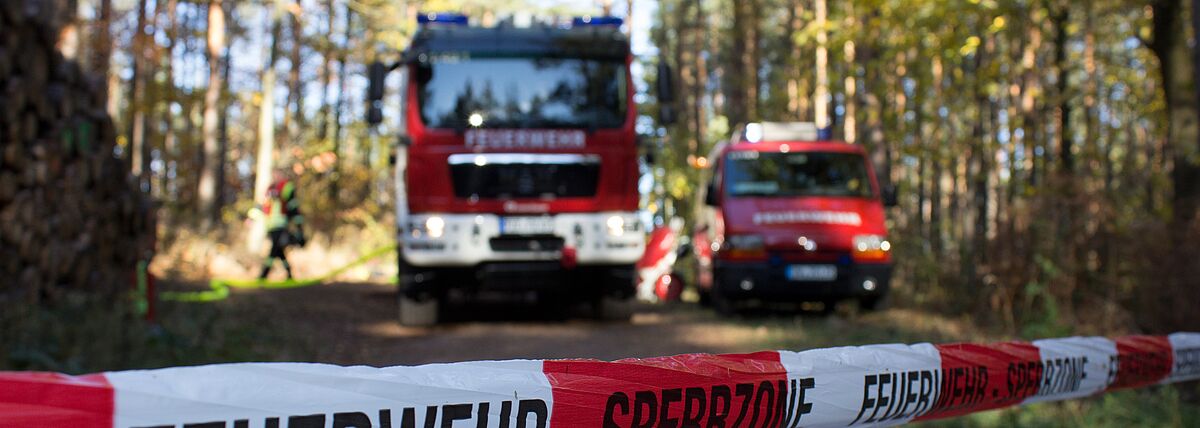
AdaptInfra subproject 3 (SP3) researches adaptation processes of security infrastructures in peripheral rural areas. Ensuring security in peripheral rural areas particular demands on police emergency response and non-police security, especially in civil protection and disaster control. Social transformation processes have a particularly serious impact in these regions and give rise to vulnerabilities that further complicate the ensurement of civil security. This makes adaptation processes of security infrastructures towards a flexible, system-oriented security practice increasingly necessary. To examine these adaptation processes security infrastructures are considered from a sociotechnical perspective, focusing on how their actors, institutional structures, as well as technical and material resources interact.
In addition to the examination of central material and personnel characteristics of security infrastructures in peripheral rural areas, institutional control options in the face of changing security situations and expectations as well as the adaptability of the security infrastructures will be examined. Furthermore, promising communication strategies and tools for informing and involving the population will be researched, along with the connection between maladaptations of institutionalized security infrastructures and the emergence of self-organized groups with security tasks. This includes consideration of impairments of trust in professional actors of the security infrastructures, as well as the population’s ability to help themselves and their potential for resilience.
SP3 uses a mixed-methods approach to examine adaptation processes retrospectively since 1990 and throughout the project period. In two waves of data collection, interviews are conducted with experts from police and civil protection institutions, multipliers from four case communities in the district of Vorpommern-Greifswald, and representatives of self-organized groups with security tasks. The interviews capture their attitudes, experiences and expectations regarding security infrastructures. In addition, secondary analyses of quantitative population surveys on security-relevant indicators and an integrative evaluation of crime, social structure and infrastructure data are carried out. Based on the material, adaptive processes are reconstructed in case studies. SP3 also addresses the overarching cross-cutting topic of “digitalization” and will examine its influence on adaptation processes of infrastructures in peripheral rural areas.
Sub-project Information
University Greifswald - Criminology, Criminal Procedure and Comparative Criminal Law and Justice
Project lead: Prof. Dr. Stefan Harrendorf
Doctoral Candidate: Kira Diermann
University Greifswald - Health and Prevention
Project lead: Prof. Dr. Silke Schmidt-Schuchert
Doctoral Candidate: Eva Gorbanenko
Sub-project Partner